You Won’t Believe What I Found in Iceland’s Public Spaces
I went to Iceland’s Golden Circle expecting waterfalls and geysers—but what truly blew me away were the public spaces in between. These aren’t just viewpoints with parking lots; they’re thoughtfully designed spots where nature and people connect. From silent hilltop rests to community-powered geothermal baths, I discovered how Icelanders shape shared spaces to deepen your experience. This is travel that doesn’t just show you a place—it lets you feel it. What I found was not only a testament to thoughtful design but also a quiet revolution in how we experience landscapes. These spaces do more than frame beauty—they invite participation, reflection, and a sense of belonging, even for those just passing through.
Reimagining the Golden Circle Beyond the Checklist
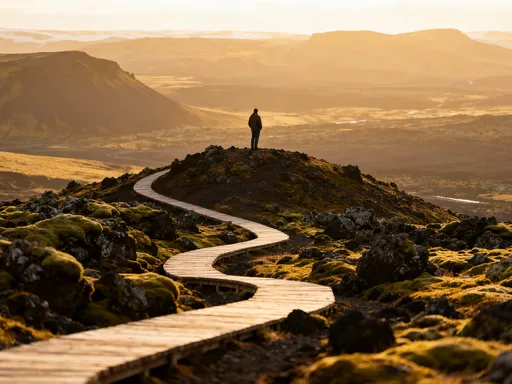
The Golden Circle is one of Iceland’s most visited routes, drawing hundreds of thousands each year to its trio of natural wonders: Thingvellir National Park, the Geysir geothermal area, and Gullfoss waterfall. For many, it’s a destination to check off a list—a series of stops measured in photo opportunities and tour bus schedules. Yet beneath the surface of this well-trodden path lies a deeper intention: a national philosophy that treats public spaces not as afterthoughts but as essential experiences. The journey between these landmarks is dotted with small but meaningful interventions—pull-offs with handcrafted wooden benches, trails that follow ancient sheep paths, and quiet clearings where the only sound is the wind over moss-covered lava fields. These are not accidents of convenience but deliberate designs that invite pause, presence, and connection.
What sets Iceland’s approach apart is its commitment to balance. On one hand, the country welcomes tourism as a vital part of its economy. On the other, it fiercely protects its natural integrity. The result is a network of public spaces that accommodate large numbers of visitors without sacrificing tranquility or ecological health. Pathways are built from local stone or timber, blending into the landscape rather than dominating it. Signage is informative but understated, often bilingual in Icelandic and English, offering geological facts, historical context, and safety advice without cluttering the view. There are no loud advertisements, no souvenir stalls at trailheads, and no ticketed access to natural sites. Instead, there is trust—trust that visitors will respect the land, and trust that thoughtful design can guide behavior without restriction.
This philosophy is evident in the flow of movement throughout the Golden Circle. At major stops, visitors are gently directed along marked trails that protect fragile vegetation while offering multiple vantage points. These trails are wide enough for families and wheelchairs, yet narrow enough to maintain intimacy with the surroundings. Rest areas are spaced at natural intervals, encouraging people to slow down rather than rush from one site to the next. In this way, the journey itself becomes part of the destination. Travelers are not merely spectators; they are participants in a carefully choreographed dialogue between human presence and natural grandeur.
Thingvellir National Park: Where History Meets Open Access
Thingvellir National Park is more than a geological marvel—it is a living monument to democracy, identity, and shared space. Located in a rift valley where the North American and Eurasian tectonic plates are slowly pulling apart, the park is home to the Almannagjá gorge, a dramatic fissure that cuts through the landscape like a scar of planetary motion. But this is not just a site for scientific fascination. Since 930 AD, it has also been the meeting place of Iceland’s parliament, the Alþingi, making it one of the oldest democratic assemblies in the world. Today, visitors walk the same path where chieftains once gathered under the open sky, their voices carried by wind across the canyon. This convergence of nature and history transforms the park into a deeply resonant public space—one that honors the past while remaining fully accessible to the present.
The park’s design reflects this dual role with remarkable sensitivity. Trails wind through the rift zone, allowing visitors to stand with one foot on each continent, yet they are carefully routed to avoid disturbing sensitive ecosystems. There are no grand entrances or ticket booths—access is free, open, and unobstructed. Informational panels are placed at key junctions, offering insights into both the geological forces at work and the historical significance of the site. These details are presented in a tone that feels educational rather than didactic, inviting curiosity without overwhelming. Picnic areas are nestled among birch groves, their tables made from reclaimed wood, blending seamlessly into the terrain. Even the visitor center, though modern and functional, is built low to the ground and partially buried, minimizing its visual impact.
What makes Thingvellir exceptional is how it fosters reflection. Unlike many tourist sites that encourage quick snapshots and faster departures, this space invites lingering. Parents sit with children on sun-warmed rocks, explaining the concept of tectonic drift. Solo travelers pause at overlooks, journaling or simply absorbing the silence. Couples walk hand in hand along the ridge, speaking in hushed tones as if not to disturb the air. These moments of quiet engagement are not incidental—they are the result of intentional design. By removing barriers, both physical and psychological, the park creates an environment where people feel not like tourists, but like temporary stewards of a sacred place.
Geysir Area: Shared Energy in Natural and Social Form
The Haukadalur Valley, home to the famous Strokkur geyser, is a place of constant motion. Every few minutes, a column of boiling water erupts up to 30 meters into the air, drawing gasps and applause from onlookers. It is a spectacle, yes, but one that could easily devolve into chaos without careful planning. Yet, the surrounding public space manages to contain the excitement while preserving a sense of order and shared experience. Wooden viewing platforms encircle the geyser, positioned at safe distances and angled for optimal visibility. They are built from durable, weather-resistant timber, their railings low enough not to block views but high enough to ensure safety, especially for children. These platforms do more than manage crowds—they create natural gathering points where strangers stand shoulder to shoulder, united by anticipation and wonder.
Around the central viewing area, the landscape opens into a broader public zone. Small cafés and souvenir shops line the periphery, offering warm drinks, traditional pastries, and locally made crafts. These commercial spaces are present but never overwhelming. They operate within strict guidelines to maintain visual harmony with the surroundings—no neon signs, no plastic awnings, no loud music. Between them, open grassy areas serve as informal gathering spots, where families spread out picnic blankets and children chase each other in the thin mountain air. Public restrooms are clean, well-maintained, and free to use, a small but significant detail that enhances comfort without detracting from the natural setting.
Beyond the immediate visitor experience, the Geysir area exemplifies how natural energy can power civic life. The same geothermal forces that fuel the geyser also heat nearby homes, greenhouses, and community buildings. In nearby villages, geothermal pools are maintained by local cooperatives, open to residents and visitors alike. This integration of natural and social infrastructure reflects a broader Icelandic value: that public resources should benefit everyone. The energy beneath the earth is not privatized or exploited for profit alone—it is shared, much like the viewing platforms above it. In this way, the Geysir area becomes more than a tourist stop; it is a model of sustainable public life, where nature and community thrive together.
Gullfoss: Designing Awe Without Distraction
Gullfoss, the "Golden Falls," is one of Iceland’s most powerful natural spectacles. Two tiers of glacial water plunge into a narrow canyon with such force that mist rises like smoke, and the ground trembles underfoot. Yet, despite its intensity, the visitor experience at Gullfoss is marked by restraint. There are no glass skywalks, no souvenir stands at the edge, no loudspeaker announcements. Instead, a simple trail of packed gravel and natural stone winds along the canyon rim, guiding visitors to multiple viewpoints without imposing on the landscape. At key moments, the path splits—offering choices between a wide-angle panorama or a closer, more intimate vantage point. This subtle design encourages exploration while ensuring safety, as guardrails appear only where the drop is most dangerous.
The absence of intrusive elements amplifies the emotional impact. Without commercial noise or visual clutter, visitors are left alone with the raw power of the falls. Many stand in silence, some close their eyes to listen, others take slow, deliberate photos. Parents kneel to explain the science of glacial runoff to wide-eyed children. Couples share a thermos of tea, their conversation brief and reverent. The space does not demand attention—it earns it through presence. Even the visitor facilities are hidden from view, tucked into the hillside or built from local stone to blend in. Public restrooms, a small café, and an information kiosk are all within walking distance, yet they do not dominate the experience. This minimalism is not due to lack of resources, but to a clear design philosophy: that some places are too powerful to be framed.
Gullfoss also demonstrates how accessibility and preservation can coexist. The main trail is wheelchair-friendly, with gentle slopes and non-slip surfaces, ensuring that people of all abilities can experience the falls. Signage includes Braille and tactile maps for visually impaired visitors, a detail that reflects Iceland’s commitment to inclusive design. Emergency call boxes are spaced along the route, and rangers patrol regularly during peak seasons. These safety measures are essential, yet they are implemented with discretion—no flashing lights, no loud alarms. The result is a space that feels both safe and wild, a rare balance in modern tourism. At Gullfoss, the land is not tamed, but it is respected, and in turn, it offers one of the most profound experiences a traveler can have: the feeling of standing before something greater than oneself.
Beyond the Big Three: Hidden Public Spaces Along the Route
While Thingvellir, Geysir, and Gullfoss dominate guidebooks, some of the most memorable moments on the Golden Circle happen in between. Along the roadside, unmarked pull-offs offer sudden encounters with beauty: a still lake reflecting snow-capped peaks, a field of wild lupines in full bloom, or a lone sheep standing on a hill like a sentinel. Many of these spots feature simple public amenities—wooden benches carved with care, stone fire pits for emergency warmth, or small shelters with roofs of corrugated metal. These are not grand installations, but they speak volumes about Iceland’s culture of care for the traveler. They say, without words: You are welcome here. Rest. Breathe. Take in the view.
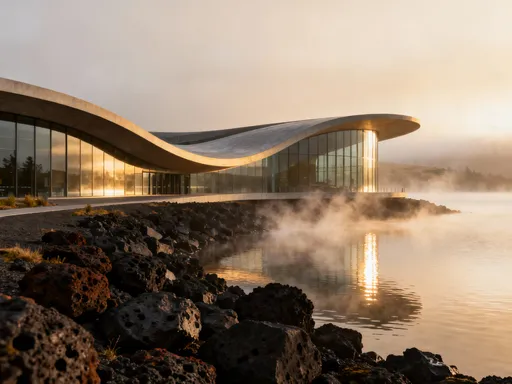
One such place is Laugarvatn Fontana, a community-run geothermal spa on the shores of Lake Laugarvatn. Unlike commercial hot spring resorts, Fontana operates as a public facility, open to locals and tourists alike. Its series of wooden bathhouses line the lakefront, each with a different temperature and mineral content. Visitors bring their own towels and follow a quiet etiquette—no loud talking, no phones, just soaking in warm, mineral-rich water while watching the mist rise off the lake. There are no luxury lounges or expensive treatments, yet the experience feels deeply restorative. This is public space as sanctuary, a place where the body and mind can reset.
Other hidden gems include roadside art installations—stone cairns arranged in meditative patterns, poetry engraved into basalt columns, or small sculptures made from driftwood and iron. These works are not signed or labeled, existing simply as gifts to passersby. They create moments of pause, prompting questions or quiet reflection. Why this poem here? Who built this cairn? What does it mean? These uncertainties are part of the charm. They remind travelers that not every experience needs explanation, and not every space needs a name. In a world of curated content and constant stimulation, these unassuming stops offer something rare: the gift of stillness.
How Public Spaces Shape the Travel Experience
Well-designed public spaces do more than accommodate visitors—they shape the emotional texture of a journey. A simple bench overlooking a lava field can become the site of a personal revelation. A shared shelter during a sudden downpour can spark a conversation between strangers that lasts long after the rain stops. These moments may seem small, but they often become the most cherished memories of a trip. In Iceland, such experiences are not left to chance. They are cultivated through thoughtful planning, a deep respect for nature, and a belief that travel should enrich the soul, not just check destinations off a list.
Consider the psychological impact of design. When pathways are wide and well-marked, people feel safe and confident exploring. When seating is available at natural intervals, they are more likely to pause and absorb their surroundings. When signage is informative but unobtrusive, learning happens organically. These elements reduce stress and increase mindfulness, allowing travelers to be more present. In contrast, overcrowded, poorly maintained spaces can leave people feeling rushed, anxious, or disconnected. Iceland’s approach shows that public infrastructure is not just about function—it is about feeling.
Moreover, these spaces foster cultural understanding. By experiencing how Icelanders interact with their environment—through shared baths, open trails, and community stewardship—visitors gain insight into national values. They see a society that prioritizes sustainability, equality, and quiet dignity. This is not tourism as escapism, but as education. It invites travelers to reflect on how their own communities design public life. Could a city park feel as restorative as a mountain overlook? Could a bus stop offer the same sense of welcome as a roadside bench in Iceland? These questions linger long after the journey ends.
Lessons for Travelers and Destinations Alike
Iceland’s public spaces offer valuable lessons for both travelers and destination planners. For visitors, the key is to slow down and engage with intention. Instead of rushing from one landmark to the next, take time to notice the details: the texture of a stone path, the sound of wind through grass, the warmth of a sunlit bench. Respect the space by leaving no trace, following local customs, and supporting community-run facilities like Fontana or family-owned cafés. Remember that these spaces exist not for profit, but for shared experience. Your presence is a privilege, not a right.
For destination managers, Iceland demonstrates that commercial success and environmental integrity are not mutually exclusive. By prioritizing access, sustainability, and human scale, communities can welcome tourism without sacrificing authenticity. Simple design choices—natural materials, unobtrusive signage, inclusive access—can profoundly enhance visitor satisfaction. Moreover, involving local communities in the stewardship of public spaces ensures that tourism benefits residents, not just outsiders. When people feel ownership over a place, they protect it.
Ultimately, the public spaces of the Golden Circle are not just backdrops to a journey—they are the journey. They remind us that travel is not only about seeing new places, but about feeling connected to them. In a world where experiences are increasingly commodified, Iceland offers a different model: one where the most powerful moments are free, open, and shared. It is a quiet invitation—to pause, to reflect, to belong, even if only for a moment. And perhaps, that is the most unforgettable destination of all.