Czech Fairytale: Where Every Building Feels Like a Photo Filter
Nestled in a lush valley carved by the Teplá River, Karlovy Vary isn’t just a spa town—it’s a living postcard. I never expected centuries-old architecture to feel so Instagram-ready, but here, baroque facades glow in golden hour, thermal springs bubble beneath ornate colonnades, and every corner looks like it was designed by a fantasy set artist. This is where history and aesthetics collide in the most shareable way. More than a destination for wellness, Karlovy Vary has become a visual pilgrimage for travelers who appreciate beauty with purpose. Its buildings do not merely stand—they narrate. Each column, dome, and cobblestone pathway tells a story of resilience, elegance, and timeless design. In an age where moments are captured as much as they are lived, this Czech gem offers a rare gift: a place where every glance feels like a perfectly composed photograph, and every photograph carries the weight of legacy.
First Impressions: Stepping Into a Storybook
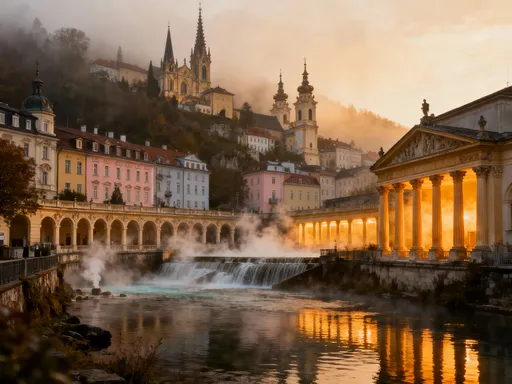
Arriving in Karlovy Vary feels less like checking into a destination and more like stepping inside an illustrated volume of European fairy tales. The town unfolds gradually as the train descends into the valley, revealing a skyline where pastel-hued buildings cling to forested slopes like ornaments on a gingerbread village. Spires rise delicately above tree lines, domes catch the sunlight in soft glimmers, and the winding course of the Teplá River reflects the town’s symmetry like a mirrored stage. This is not accidental beauty—it is architecture shaped by vision, fire, and rebirth. Much of what stands today was rebuilt in the 19th century after devastating fires, and rather than restoring the town to its former state, architects seized the opportunity to reimagine it with a unified aesthetic. The result is a rare harmony of Neo-Renaissance, Baroque, and Art Nouveau styles that coexist seamlessly, creating a townscape that feels both historic and intentionally curated.
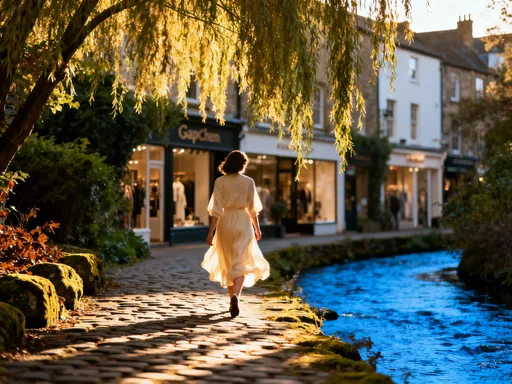
Unlike many European towns where landmarks are isolated pockets of grandeur, Karlovy Vary’s beauty is immersive. You don’t just visit its architecture—you walk through it, beneath it, alongside it. The buildings are not museum pieces behind velvet ropes; they are part of daily life, housing cafes, shops, and centuries-old spa facilities. The visual narrative begins the moment you cross the stone footbridge near the town center, where the first glimpse of the Mill Colonnade rises like a marble dream above the river. Every turn offers a new composition: a balcony draped in ivy, a gilded weather vane catching the breeze, a fountain framed by weeping willows. This is a place where even the most casual traveler feels like a photographer, compelled to pause, frame, and capture. The town doesn’t demand attention—it earns it, effortlessly, through a quiet confidence in its own design.
What sets Karlovy Vary apart is its balance between grandeur and intimacy. While the scale of its buildings is impressive, they are never overwhelming. The proportions are human, the details inviting. Windows are adorned with floral ironwork, doors are painted in deep jewel tones, and rooflines are punctuated with dormer windows that seem to wink from the hills. Even in peak season, the town retains a sense of calm, as though it knows its beauty is enduring, not fleeting. For visitors, especially women between 30 and 55 who value both cultural depth and aesthetic pleasure, Karlovy Vary offers a rare combination: a place that is both restorative and inspiring. It is not just a destination to see—but one to feel, remember, and return to in memory.
The Mill Colonnade: Where Elegance Meets Function
If Karlovy Vary has a beating heart, it is the Mill Colonnade. Stretching 132 meters along the riverbank, this grand structure is more than an architectural marvel—it is the town’s thermal and social epicenter. Completed in the 1880s, it replaced earlier wooden colonnades destroyed by fire, and its design reflects both the ambition and refinement of the era. With five sweeping arches supported by white neoclassical columns, the colonnade shelters twelve mineral springs, each with its own unique composition and reputed health benefits. The most famous of these is Vřídlo Spring, whose geyser-like jet shoots naturally carbonated water up to 12 meters into the air, a spectacle that draws visitors day and night. This is not just a display of nature’s power, but a testament to how Karlovy Vary has learned to frame and celebrate its natural gifts with architectural grace.
Walking beneath the glass roof of the Mill Colonnade is like moving through a cathedral of light and water. Sunlight filters through the panes, casting shifting patterns on the marble floor, while steam rises gently from the spring outlets. Visitors sip the hot, mineral-rich water from traditional porcelain cups, some adding a splash of local liqueur for flavor. The ritual is as much a part of the experience as the architecture itself. Every element—the sculpted mythological figures on the arches, the ornate iron railings, the delicate carvings on the pillars—serves both an aesthetic and functional role. There are no decorative excesses here; even the most intricate relief has been placed to withstand centuries of use while enhancing the sense of occasion.
For photographers and casual observers alike, the Mill Colonnade offers endless opportunities for compelling images. Early morning brings a soft, diffused light that highlights the texture of the stone and the gentle plume of rising steam. Midday sun creates sharp contrasts between shadow and illumination, perfect for capturing the symmetry of the arches. At dusk, the colonnade is softly lit from within, transforming it into a glowing centerpiece against the darkening sky. Whether shot in wide angles to capture its full span or in close-ups to reveal the craftsmanship of a single column, the structure never fails to impress. More than just a backdrop, it is a living stage where tradition, wellness, and beauty intersect—a place where every visitor becomes part of a centuries-old story.
The Grandhotel Pupp: Drama in Stone and Stucco
Dominating the town’s central square, the Grandhotel Pupp stands as a monument to elegance, history, and cinematic allure. This sprawling neoclassical building, with its symmetrical façade, grand staircase, and manicured gardens, has been a fixture of Karlovy Vary’s identity since the 18th century. Though the current structure largely dates from a major reconstruction in the early 2000s, it faithfully preserves the grandeur of its predecessors, which once hosted emperors, composers, and European aristocracy. Today, it continues to attract distinguished guests, including attendees of the Karlovy Vary International Film Festival, one of Central Europe’s most prestigious cinematic events. To walk past its entrance is to feel the weight of legacy—and the thrill of stepping into a scene that could belong to any number of grand historical dramas.
The hotel’s exterior is a masterclass in architectural balance. Its pale yellow façade is accented with white stucco detailing, and rows of tall, arched windows reflect the river and sky in perfect symmetry. The central portico, supported by Ionic columns, leads to a lobby that unfolds like a palace hall—complete with crystal chandeliers, marble floors, and gilded moldings. But even those who do not stay as guests can appreciate its presence. From the riverbank, the hotel appears as a stately figure presiding over the town, its reflection shimmering in the water like a mirage. It is no surprise that this building was chosen as a filming location for *Casino Royale* (2006), where it stood in for a luxury spa hotel. Its aura of sophistication and quiet power makes it one of the most photographed structures in the Czech Republic.
What makes the Grandhotel Pupp more than just a luxury landmark is its integration into the town’s rhythm. Its terrace café spills onto the promenade, offering views of the colonnade and river, while its spa facilities remain open to day visitors. This accessibility ensures that its grandeur is not locked behind gates but shared with the public. For women who appreciate both comfort and culture, the hotel represents a rare ideal: a place that is opulent without being intimidating, historic without feeling frozen in time. Whether seen from afar, admired up close, or experienced from within, the Grandhotel Pupp reminds us that true elegance is not about excess—it is about proportion, detail, and the quiet confidence of enduring design.
Church of St. Mary Magdalene: Quiet Majesty
Perched on a gentle hill above the town, the Church of St. Mary Magdalene offers a different kind of beauty—one rooted in serenity and spiritual grace. Built in the mid-18th century, this Baroque church was designed by Kilian Ignaz Dientzenhofer, one of Bohemia’s most celebrated architects. Its green copper dome and twin bell towers rise above the treetops, visible from nearly every corner of Karlovy Vary. Unlike the bustling colonnades and hotels below, the church exists in a space of stillness. The path leading to it winds through a quiet park, where benches invite contemplation and the sound of birds replaces the hum of tourists. This is not a place designed for spectacle, but for reflection—and yet, it is among the most visually striking structures in the region.
The exterior of the church is a study in restrained elegance. The pale stone façade is accented with subtle carvings, and the dome catches the light in soft, changing hues throughout the day. At sunrise, the building glows in pale gold; at twilight, it darkens into a silhouette against the evening sky. Photographers often gather here in the early hours, drawn by the clarity of light and the absence of crowds. The contrast between the stone architecture and the surrounding foliage creates a natural frame, making even the simplest shots feel intentional and poetic. Inside, the atmosphere is equally moving. Frescoes cover the ceiling, depicting scenes of divine light and grace, while the main altar shimmers with gold leaf and intricate woodwork. The acoustics are exceptional, and occasional organ recitals fill the space with music that seems to float above the pews.
For many visitors, especially those seeking a moment of peace amid a packed itinerary, the Church of St. Mary Magdalene provides a necessary pause. It is a reminder that beauty does not always require fanfare. While other landmarks in Karlovy Vary dazzle with scale and ornamentation, this church speaks in whispers. It does not compete for attention—it earns reverence through its presence. For women who value both inner and outer harmony, the church offers a powerful symbol: that true strength often lies in quiet dignity, and that the most lasting impressions are not always the loudest.
Thermal Springs & Hidden Cornices: Architecture with a Purpose
The magic of Karlovy Vary is not confined to its grand landmarks. Some of its most charming details are found in the smaller, functional structures that dot the town—miniature colonnades, spring houses, and ornate pipes that carry mineral water from underground sources to public outlets. These are not afterthoughts or utilitarian fixtures; they are integral to the town’s architectural language. Each one is designed with care, blending utility with artistry in a way that elevates the everyday. The Moser Spring, named after the famous Czech glassmaker, is housed under a delicate iron canopy adorned with floral motifs. The Spring Colonnade, though smaller than its grander counterparts, features rococo-style columns and a domed roof that glimmers in the sunlight. Even the pipes themselves—some wrapped in decorative metal, others painted in soft pastels—are treated as design elements rather than mere infrastructure.
This integration of function and beauty reflects a deeper philosophy: that wellness and aesthetics are not separate pursuits, but interconnected. The town’s architects understood that the act of drinking thermal water should be more than medicinal—it should be an experience. Standing at one of the spring outlets, cup in hand, you are not just consuming water; you are participating in a ritual that has been refined over centuries. The surroundings enhance the moment, turning a simple act into a sensory delight. The sound of bubbling water, the warmth of the stone basins, the sight of sunlight filtering through an arched roof—all contribute to a sense of calm and intention.
For the observant traveler, these smaller structures offer some of the most rewarding photographic opportunities. A close-up of a weathered inscription on a spring plaque, a reflection of clouds in a still pool, the curve of an iron railing against a blue sky—these details tell the story of Karlovy Vary just as powerfully as its grand hotels and churches. They reveal a town that values craftsmanship, continuity, and the quiet dignity of well-made things. In an age of mass production and disposable design, Karlovy Vary stands as a reminder that even the most functional objects can carry beauty, meaning, and legacy.
Best Times & Angles for the Perfect Shot
To truly capture the essence of Karlovy Vary, timing and perspective are everything. The golden hours—just after sunrise and before sunset—transform the town into a dreamlike tableau. Morning light softens the edges of the Mill Colonnade, casting long shadows that emphasize its arches and columns. The air is still, and the river reflects the buildings with near-perfect clarity. This is the ideal time for wide-angle shots that capture the town’s layout, or for close-ups that highlight texture and detail. By late afternoon, the light shifts, bathing the Grandhotel Pupp in warm amber tones. The façade glows, and the reflection in the river takes on a golden hue, creating a romantic, almost cinematic effect.
For those seeking unique compositions, the town’s winding pathways offer natural leading lines. Cobblestone streets curve gently between buildings, drawing the eye toward distant spires or river bends. Elevated viewpoints, such as the path leading to the Church of St. Mary Magdalene or the observation deck near the Diana Lookout Tower, provide panoramic perspectives that showcase the town’s relationship with the surrounding landscape. Reflection shots are particularly effective at dusk, when the illuminated buildings shimmer in the darkening water. A tripod is recommended for low-light photography, but even smartphone users can achieve stunning results with patience and a steady hand.
Winter adds another dimension to Karlovy Vary’s visual appeal. When snow dusts the rooftops and icicles hang from colonnade eaves, the town resembles a holiday film set. Steam rises constantly from the thermal springs, creating an ethereal fog that drifts through the streets. The contrast of warm light spilling from café windows against the cool blue of snow-covered hills is especially evocative. For women who love seasonal beauty and cozy atmospheres, a winter visit offers a deeply comforting experience—one that blends wellness, tradition, and visual enchantment in equal measure.
Beyond the Frame: Why These Buildings Matter
The architecture of Karlovy Vary is more than a collection of beautiful buildings. It is a testament to centuries of cultural exchange, healing traditions, and architectural resilience. Every colonnade, hotel, and church stands as a monument to the town’s enduring role as a sanctuary for wellness and refinement. These structures were not built for vanity, but for purpose—to shelter, to heal, to inspire. Preserving them is not merely about maintaining tourist attractions; it is about honoring a legacy of craftsmanship, intention, and human care.
When you photograph Karlovy Vary, you are not just capturing a moment—you are documenting history. Each image carries the weight of generations who walked these same paths, drank from these same springs, and marveled at these same facades. For women who value both beauty and meaning, the town offers a powerful message: that true elegance is not fleeting, but built to last. It is found not in perfection, but in continuity—in the quiet persistence of design that serves both the eye and the soul. Karlovy Vary reminds us that the places we love are not just seen, but felt, remembered, and passed on. And in that act of remembering, we become part of the story too.