What I Learned Avoiding Food Fails in Kumasi
You know that feeling when you’re hungry in a new city and just point at something that looks good? In Kumasi, Ghana, I did that—and it taught me a lot. Local cuisine here is bold, vibrant, and deeply cultural, but diving in without guidance can lead to serious missteps. From market surprises to spice levels that hit like a truck, my taste buds got schooled. This is not your average food adventure—it’s real, messy, and totally worth getting right. What I thought would be a simple meal turned into a lesson in patience, respect, and cultural awareness. Kumasi doesn’t just feed the body; it challenges the traveler to slow down, observe, and learn. This is the story of how I stopped making food mistakes—and started truly tasting the soul of Ghana.
Arrival in Kumasi: First Impressions of a City Alive with Flavor
Stepping off the bus into the heart of Kumasi, the air was thick with the scent of roasting plantains, charcoal smoke, and something earthy and unfamiliar. Horns blared, vendors called out in Twi, and the sidewalks pulsed with energy. Everywhere I looked, there were food stalls—some no bigger than a cart—serving steaming plates of waakye, jollof rice, and grilled meats on sticks. The sensory overload was immediate and intoxicating. For a food lover, it felt like walking into a living cookbook. But beneath the excitement was a quiet warning: this is not a city that rewards haste. My first instinct—to grab the nearest colorful dish—was exactly what got me into trouble.
Many visitors arrive with misconceptions about Ghanaian food, assuming it’s similar to other West African cuisines or that it’s all about stews and starches. While there is truth to that, the depth and variety are often underestimated. Kumasi, as the cultural heart of the Ashanti Region, offers dishes steeped in tradition, from banku served with hot pepper sauce to tuo zaafi, a thick porridge made from millet or corn. These meals are not just sustenance—they’re expressions of identity, hospitality, and history. Eating here is a social act, often shared from a single bowl, and done with the right hand only. Ignoring these nuances can lead to more than just discomfort; it can be seen as disrespectful.
Jumping straight into unknown dishes without understanding their components or preparation methods is a common mistake. I once ordered what I thought was a mild soup, only to discover it contained kontomire—a stew made from cocoyam leaves—and a level of spice that left me gasping. Without knowing how it was made or what was in it, I had no way to anticipate the intensity. That experience taught me the value of pausing, observing, and asking questions before taking that first bite. In Kumasi, food is not fast. It’s meant to be approached with care, curiosity, and humility.
The Allure of Street Food: Why It’s Both Irresistible and Risky
Street food is the lifeblood of Kumasi’s culinary culture. More than half of daily meals are consumed outside the home, and the city’s network of vendors is both vast and efficient. From early morning waakye sellers to late-night kebab grills, the rhythm of the city is tied to the rhythm of the food carts. The appeal is undeniable: affordability, authenticity, and the chance to eat exactly what locals are eating. But with that opportunity comes risk—especially for visitors unfamiliar with food safety practices in a tropical climate.
Not all stalls are created equal. The key to choosing wisely lies in observation. A busy stall with high turnover is usually a good sign—fresh ingredients are constantly being used, and food doesn’t sit out long enough to spoil. I learned this the hard way after buying a fried fish sandwich from a quiet corner vendor. The fish had been sitting under a mesh cover for hours, and though it looked clean, it didn’t survive the Ghanaian heat. That night, I spent more time in the bathroom than in bed, a classic case of traveler’s stomach. It wasn’t contaminated water or exotic ingredients—it was simply food left too long in warm conditions.
Hygiene standards vary, and while many vendors take pride in their cleanliness, others operate with limited access to running water or refrigeration. I began to notice patterns: the best stalls had covered containers, clean hands, and often a steady stream of local customers. One elderly woman near the Kejetia Market entrance served banku and okra stew from a spotless cart, and her regulars included police officers and market workers—people who couldn’t afford to get sick. I followed their lead. Over time, I developed a personal checklist: avoid raw vegetables unless peeled on the spot, skip ice unless it’s from a sealed source, and never drink from open bottles offered on the street.
Fufu and Light Soup: A Love Story with a Learning Curve
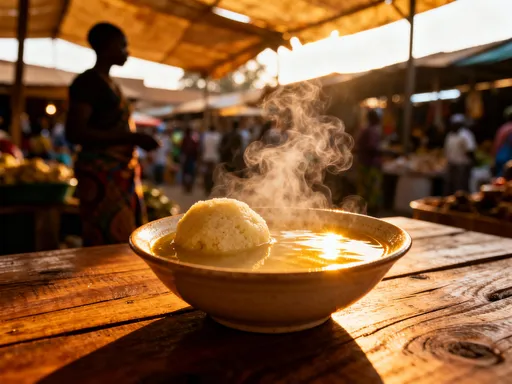
No visit to Kumasi is complete without trying fufu, the iconic pounded dough served with light soup. It’s a dish that appears simple but carries layers of cultural significance. Fufu is made by boiling cassava and plantains, then pounding them into a smooth, stretchy ball. It’s served hot, alongside a flavorful broth made with tomatoes, onions, and meat or fish. The soup is light in texture but rich in taste, often seasoned with ginger and herbs. But the real challenge isn’t the flavor—it’s the eating.
There’s a proper way to eat fufu, and doing it wrong is instantly noticeable. The correct method involves pinching off a small piece of the dough, rolling it into a ball with the right hand, pressing a small dent into it, and using it to scoop up the soup. It’s all done without utensils. My first attempt was clumsy: I used my left hand, dropped chunks into the bowl, and accidentally splashed soup on my shirt. The family I was dining with smiled politely, but I could sense their amusement. Later, a local friend gently corrected me, explaining that using the left hand is considered unclean in many Ghanaian homes, as it’s traditionally used for hygiene purposes.
Learning this etiquette transformed my experience. Once I got the technique down, eating fufu became not just a meal, but a moment of connection. I began asking for help—politely, with a smile—and found that most people were eager to teach. One elderly woman at a roadside eatery demonstrated the motion slowly, saying, “Like this, my daughter. Gentle, like you’re holding something precious.” That moment of kindness stayed with me longer than any flavor. For first-timers, the best approach is to watch, imitate, and ask. A simple “Can you show me how to eat this?” goes a long way in building trust and showing respect.
Spice Levels That Surprise Even the Brave
If there’s one thing that caught me off guard in Kumasi, it was the heat. I consider myself a fan of spicy food—habaneros, Scotch bonnets, even ghost peppers have met their match in my kitchen. But Ghanaian spice is different. It doesn’t just burn; it lingers, builds, and wraps around your senses. What starts as a mild warmth can escalate into a full-body experience within minutes. I learned this after casually accepting “just a little pepper” in my kontomire stew. That “little” turned out to be a whole scotch bonnet, finely chopped and blended into the sauce.
Local heat is often underestimated by visitors because it doesn’t always announce itself upfront. Unlike Mexican or Thai cuisines, where spice levels are sometimes indicated on menus, in Kumasi, heat is often assumed. It’s part of the flavor profile, not an optional add-on. Dishes like groundnut soup or abenkwan (palm nut soup) may look mild but pack a serious punch. The oils from the peppers infuse the entire dish, making it impossible to remove the source of heat once it’s cooked in. I once tried to fish out the peppers, only to be told by my host, “They’ve already given their soul to the soup. No going back now.”
Smart travelers learn to test before they commit. I started asking for a tiny taste on the edge of a spoon—just enough to gauge the intensity. I also learned to look for visual cues: bright red swirls in a stew, the presence of whole peppers on the side, or the way locals sip water between bites. Carrying a small container of plain yogurt or drinking coconut water helped soothe my palate when I miscalculated. Over time, my tolerance improved, but so did my respect. Spice in Kumasi isn’t about machismo; it’s about flavor, tradition, and the shared experience of eating together. Approaching it with caution doesn’t make you weak—it makes you wise.
Markets as Culinary Classrooms: Kejetia and Beyond
Kejetia Market is not just the largest in West Africa—it’s a living encyclopedia of Ghanaian food culture. Stretching across several city blocks, it’s a maze of stalls selling everything from fresh produce to dried fish, spices, and handmade pottery for cooking. The air is thick with the scent of smoked snails, dried shrimp, and crushed ginger. It’s overwhelming, chaotic, and utterly fascinating. For a food traveler, it’s the ultimate classroom. But it’s also a place where a lack of knowledge can lead to confusion—or worse, a bad meal.
One of my earliest mistakes was buying what I thought was regular flour, only to discover it was fermented corn dough meant for kenkey. Another time, I nearly purchased rancid palm oil because I didn’t know how to spot the signs—cloudiness, off smell, or a bitter taste. These ingredients are staples in local cooking, but they require understanding. Smoked fish, for example, is essential in many soups, but it must be properly stored and rehydrated. Fermented doughs like that used for banku develop a sour tang that’s intentional, but to an untrained palate, it can seem spoiled.
The key to navigating Kejetia is conversation. I began asking questions—gently, with genuine interest. “What do you use this for?” “How do you cook it?” “Is it fresh today?” Vendors responded with pride, often offering samples or cooking tips. One woman demonstrated how to test the quality of palm oil by rubbing a drop between her fingers—“If it’s smooth and red, it’s good. If it’s sticky or dull, leave it.” These interactions did more than teach me about food; they built bridges. By showing curiosity rather than fear, I earned trust and gained access to deeper knowledge. Kejetia isn’t just a market—it’s a community, and it rewards those who engage with respect.
When “Local Hospitality” Meets Dietary Limits
In Kumasi, food is love. When someone invites you to eat, they’re offering more than a meal—they’re offering belonging. Refusing is often seen as rejecting the relationship. This creates a delicate situation for travelers with dietary restrictions, allergies, or health concerns. I once attended a family dinner where the host served a rich goat stew with banku. I’m lactose intolerant, and while there was no dairy in the dish, the communal nature of the meal meant I couldn’t easily avoid shared utensils or cross-contact. When I politely declined seconds, the host insisted, “Just a little more! You haven’t eaten enough!”
Navigating this requires a balance of honesty and diplomacy. I learned to explain my needs in a way that honored the gesture. Instead of saying “I can’t eat this,” I’d say, “This is so delicious, but my stomach is very sensitive. I don’t want to miss any of your kindness, so I’ll take just a small portion.” I also began carrying a small card with common dietary phrases in Twi and English, which helped in more formal settings. Most hosts appreciated the effort and often went out of their way to prepare something safe.
Allergies require extra care. While peanut and seafood allergies are becoming more recognized, they’re still not universally understood. I made it a point to ask about ingredients in advance, especially in soups where oils and broths can contain hidden allergens. In one case, a restaurant owner personally checked with the cook and even prepared a separate pot to ensure safety. These moments of care reminded me that respect is mutual. By communicating clearly and gratefully, I was able to enjoy meals without compromising my health or hurting feelings.
Smart Eating Strategies: Staying Safe Without Missing Out
After my early missteps, I developed a set of personal rules to enjoy Kumasi’s food scene safely. The most important was the 24-hour rule: wait a full day after arriving before trying anything bold or unfamiliar. This gives your digestive system time to adjust to the local water, climate, and microbial environment. I also made sure to eat well-cooked, piping-hot foods during my first few days, avoiding raw salads or unpeeled fruits until my body acclimated.
Carrying safe snacks became a non-negotiable. I packed granola bars, dried fruit, and sealed crackers—not because I didn’t trust the food, but because I didn’t want to be stranded hungry in a situation where options were limited. I also kept digestive aids like probiotics and rehydration salts in my bag. There’s no shame in being prepared; it’s what allows you to take smart risks later. One of my most successful meals was a spicy okra stew I’d avoided for days—only to try it after building up my tolerance gradually.
Building a food rhythm helped me balance adventure with safety. I designated certain meals for exploration—usually lunch, when I could rest afterward—and kept breakfast simple with bread, eggs, and fruit. I also paid attention to timing: street food is freshest in the morning and early evening, when turnover is highest. By planning loosely and staying flexible, I maximized enjoyment while minimizing risk. The goal wasn’t to avoid all danger, but to make informed choices that let me engage fully.
Conclusion
Eating in Kumasi isn’t just about survival—it’s about connection. Every meal is a conversation, every flavor a story. By respecting the culture, staying aware, and learning from early mistakes, travelers can enjoy Ghana’s rich cuisine without fear. The key isn’t avoiding risks entirely, but approaching them wisely. Let your curiosity lead, but let caution guide. In the end, the true taste of Kumasi comes not from any single dish, but from the journey to truly understand it. With patience, humility, and a willingness to learn, every bite becomes a bridge—to people, to tradition, and to a deeper way of traveling. The food of Kumasi doesn’t just feed the body. It feeds the soul.