You Won’t Age Like Before – Here’s How I Finally Tamed Stress and Felt Years Younger
Stress isn’t just exhausting—it quietly speeds up aging, showing up in wrinkles, low energy, and brain fog. I used to feel older than I was until I discovered how deeply stress affects the body. This guide shares science-backed ways I reduced daily tension, protected my cells, and reclaimed a brighter, more vibrant version of myself—no magic, just real, doable steps that made a visible difference. What if aging weren’t just about time passing, but about how we respond to life’s pressures? The truth is, chronic stress reshapes our biology in ways most of us never see coming. But the good news? We can change that trajectory, starting today.
The Hidden Link Between Stress and Aging
When stress lingers, it does far more than make you feel overwhelmed—it alters your body at the cellular level. Scientists now understand that chronic stress contributes directly to accelerated biological aging, a process that can make a 45-year-old woman’s body resemble that of someone ten years older. Unlike chronological age, which simply counts the years, biological age reflects how well your cells, organs, and systems are functioning. This distinction is crucial because two women the same age can have vastly different health trajectories based on how they manage daily stressors.
One of the most significant discoveries in recent years is the role of telomeres—tiny protective caps at the ends of our chromosomes. Every time a cell divides, these telomeres naturally shorten. When they become too short, the cell can no longer divide and either dies or becomes dysfunctional. This process is a hallmark of aging. Research from the Nobel Prize-winning work of Dr. Elizabeth Blackburn has shown that chronic stress accelerates telomere shortening. In one study, women with high perceived stress had telomeres that were significantly shorter—equivalent to at least one decade of additional aging—compared to those with lower stress levels.
Inflammation is another key player. The body’s stress response triggers the release of pro-inflammatory cytokines, which, in small bursts, help fight infection. But when stress is constant, this inflammation becomes chronic, damaging tissues throughout the body. It affects the skin by breaking down collagen and elastin, leading to sagging and fine lines. It impairs cognitive function by affecting the hippocampus, the brain’s memory center. It even weakens the immune system, making recovery from illness slower and less efficient. These changes may seem subtle at first—more frequent colds, difficulty concentrating, or a complexion that lacks its former glow—but over time, they accumulate into visible signs of premature aging.
The real danger lies in how quietly this happens. Most women don’t wake up one day and suddenly feel aged. Instead, it’s a slow erosion: less energy in the afternoon, more effort needed to manage household tasks, a growing sense that life feels heavier than it used to. These are not just “part of getting older.” They are signals from the body that stress has taken root. Recognizing them as such is the first step toward reclaiming vitality. By addressing stress not just as a mood issue but as a biological force, we gain the power to slow down aging from within.
How Stress Rewires Your Body (And Why You Feel It Everywhere)
To understand why stress feels so all-consuming, we need to look at the body’s internal alarm system: the hypothalamic-pituitary-adrenal (HPA) axis. When the brain perceives a threat—whether it’s an argument, a tight deadline, or financial worry—it signals the adrenal glands to release cortisol, the primary stress hormone. In short bursts, cortisol is helpful. It sharpens focus, increases energy, and prepares the body to respond. But when stress becomes constant, cortisol remains elevated, and that’s when problems begin.
Imagine cortisol as a fire alarm designed to sound only during emergencies. Now picture that alarm going off every hour, every day. Eventually, the system becomes overwhelmed. The body stops responding appropriately, leading to cortisol resistance—similar to insulin resistance in diabetes. As a result, even more cortisol is produced, creating a harmful cycle. This persistent activation keeps the body in a state of “fight-or-flight,” diverting resources away from long-term maintenance like tissue repair, digestion, and immune defense.
One of the most visible effects is on the skin. High cortisol levels increase the breakdown of collagen, the protein responsible for skin firmness and elasticity. At the same time, it reduces skin hydration and slows wound healing. This double impact leads to a dull, thinning complexion and deeper wrinkles—changes many women attribute solely to age or sun exposure. Yet studies show that individuals with higher perceived stress have measurably worse skin barrier function and slower recovery from environmental damage.
Sleep is another casualty. Cortisol follows a natural rhythm, peaking in the morning and declining at night to allow melatonin to rise and promote restful sleep. Chronic stress flattens this rhythm, leading to nighttime awakenings, difficulty falling asleep, or unrefreshing sleep. Poor sleep, in turn, increases cortisol the next day, creating a self-reinforcing loop. Over time, this disrupts hormone balance, including estrogen and progesterone, which further affects skin health, mood, and energy levels.
The immune system also suffers. Cortisol suppresses immune activity to prevent excessive inflammation during acute stress. But long-term suppression leaves the body more vulnerable to infections and slows recovery. This is why many women notice they catch more colds during stressful periods or take longer to bounce back after minor illnesses. The connection between stress and physical decline is not imaginary—it is written in the body’s biochemistry, affecting every system from the brain to the gut to the joints.
Mindful Breathing: The 5-Minute Reset That Changes Everything
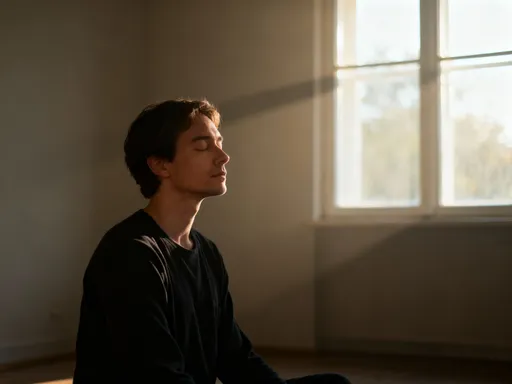
Among the many tools I explored, one stood out for its simplicity and immediate impact: mindful breathing. Unlike supplements or expensive treatments, this practice requires no equipment, no special training, and just five to ten minutes a day. The technique I adopted is called diaphragmatic breathing, also known as belly breathing. It involves slow, deep breaths that engage the diaphragm rather than shallow chest breathing, which is common during stress.
The science behind it is compelling. A study published in the journal *Frontiers in Psychology* found that just five minutes of diaphragmatic breathing significantly reduced cortisol levels and improved heart rate variability (HRV), a key marker of resilience. High HRV indicates a flexible nervous system that can adapt easily to stress, while low HRV is linked to fatigue, anxiety, and accelerated aging. By practicing mindful breathing daily, I noticed my HRV improved within weeks, along with a greater sense of calm and mental clarity.
Here’s how to do it: Sit comfortably with your back straight or lie down in a quiet space. Place one hand on your chest and the other on your abdomen. Inhale slowly through your nose for a count of four, allowing your belly to rise while keeping your chest still. Hold for a moment, then exhale slowly through your mouth for a count of six. Repeat for five to ten minutes. The key is consistency—doing it every morning or before bed, even when you don’t feel stressed.
Within two weeks, I began to notice changes. My morning anxiety diminished. I felt more focused during the day, with fewer mental lapses. Even my skin looked different—more even-toned and less prone to redness. A dermatologist later explained that reduced cortisol likely decreased inflammation, improving skin barrier function. What surprised me most was how such a small habit created a ripple effect. By starting the day with intention, I made better choices—eating more mindfully, moving more gently, sleeping more deeply. It wasn’t a cure-all, but it became the foundation of a calmer, more balanced life.
Movement That Soothes: Gentle Exercise for Longevity
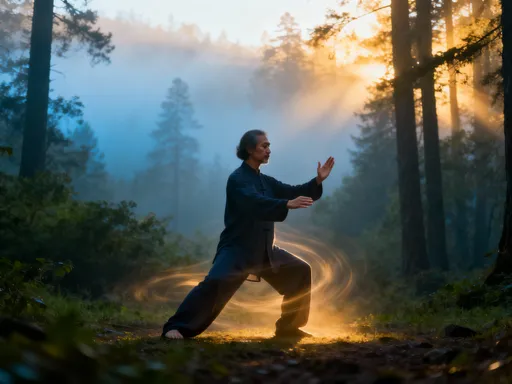
For years, I believed that effective exercise had to be intense—sweating through high-impact classes, pushing through fatigue, measuring progress by how sore I felt the next day. But as I learned more about stress and aging, I realized that aggressive workouts could actually increase cortisol, especially when combined with poor sleep or emotional strain. The goal wasn’t to exhaust the body but to support it. That’s when I shifted to gentler forms of movement: walking in nature, restorative yoga, and tai chi.
These activities fall under the category of “parasympathetic-promoting exercise”—movement that calms the nervous system rather than stimulating it. A study in the *Journal of Aging and Physical Activity* found that older women who practiced tai chi three times a week showed lower cortisol levels, better balance, and improved mood compared to those doing conventional exercise. Walking in green spaces has similar benefits. The combination of rhythmic motion, fresh air, and natural scenery reduces mental fatigue and enhances feelings of well-being.
I started with a simple 20-minute walk each morning, rain or shine. I left my phone behind and focused on my breath, the sound of birds, the feel of the ground beneath my feet. Over time, I added a weekly yoga class and short tai chi videos at home. The changes were subtle but meaningful. My joints felt less stiff. I had fewer aches after long days. My mood stabilized—I wasn’t as reactive to small frustrations. Most importantly, I no longer dreaded exercise. Instead, it became a form of self-care, a daily gift to my body.
These practices also support mitochondrial health. Mitochondria are the energy factories inside our cells, and their decline is a key factor in aging. Chronic stress damages mitochondria, reducing energy production and increasing oxidative stress. Gentle, consistent movement, however, enhances mitochondrial efficiency and biogenesis—the creation of new mitochondria. This means more sustainable energy, better recovery, and slower cellular aging. By choosing movement that soothes rather than depletes, I wasn’t just staying active—I was protecting my long-term vitality.
Sleep as a Repair Ritual: Why Rest Is Anti-Aging Medicine
If there’s one habit that transformed my appearance and energy more than any other, it was improving my sleep. During deep sleep, the body performs critical repair work: clearing metabolic waste from the brain, rebuilding tissues, balancing hormones, and strengthening the immune system. Without enough quality sleep, these processes slow down or stop altogether. The result? Accelerated aging, both inside and out.
I used to underestimate the power of rest. I’d stay up late catching up on chores or scrolling through my phone, thinking I could “catch up” on sleep later. But research shows that sleep debt cannot be fully repaid. Chronic sleep deprivation increases cortisol, reduces growth hormone (essential for skin and muscle repair), and impairs glucose metabolism—raising the risk of weight gain and insulin resistance. It also shrinks the prefrontal cortex, the part of the brain responsible for decision-making and emotional regulation, making stress harder to manage.
To reclaim restful sleep, I focused on consistency. I set a bedtime and wake-up time—even on weekends—and stuck to them as closely as possible. I created a calming evening routine: turning off screens by 9 p.m., sipping herbal tea, reading a book, and dimming the lights. I also made my bedroom a sleep sanctuary: cool, dark, and quiet, with blackout curtains and a white noise machine. These small changes made a big difference. Within three weeks, I was falling asleep faster and waking up feeling more refreshed.
The effects extended beyond energy. My skin looked more radiant, with fewer dark circles. My digestion improved. I made fewer impulsive food choices. Sleep, I realized, wasn’t passive downtime—it was active healing. Every night, I was giving my body the chance to reset, repair, and renew. By treating sleep as non-negotiable self-care, I wasn’t just surviving—I was thriving. And in the long term, this nightly ritual may be one of the most powerful anti-aging strategies available to us.
Food That Fights Stress (And Slows Aging)
Nutrition plays a quiet but profound role in how we age and how we handle stress. While no single food can erase wrinkles or eliminate anxiety, a diet rich in whole, anti-inflammatory ingredients supports cellular health and stabilizes mood. I didn’t adopt a strict diet or eliminate entire food groups. Instead, I focused on adding nourishing foods that naturally combat oxidative stress and support brain function.
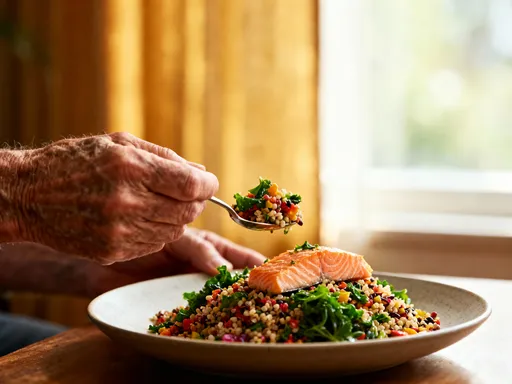
Leafy greens like spinach and kale are packed with magnesium, a mineral that helps regulate cortisol and supports nerve function. Many women are mildly deficient in magnesium, especially under stress, which can worsen fatigue and muscle tension. Berries—especially blueberries and strawberries—are high in antioxidants like anthocyanins, which protect brain cells from damage and improve cognitive flexibility. Nuts and seeds, particularly walnuts and flaxseeds, provide omega-3 fatty acids that reduce inflammation and support skin hydration.
Fatty fish like salmon and sardines are another cornerstone. They deliver DHA, a type of omega-3 that is a major structural component of the brain. Studies show that higher DHA levels are associated with better memory and slower cognitive decline. I began eating fish twice a week, often grilled with lemon and herbs, and noticed a difference in my mental sharpness within a month. Even my skin felt more supple, likely due to improved lipid barrier function.
I also made simple swaps. Instead of reaching for coffee when afternoon fatigue hit, I switched to green tea. It contains L-theanine, an amino acid that promotes relaxation without drowsiness, and a modest amount of caffeine that boosts alertness without the jitters. This small change reduced my anxiety and eliminated the 3 p.m. crash. I focused on balanced meals—protein, fiber, and healthy fats—to keep blood sugar stable, which in turn helped regulate mood and energy. Over time, these choices added up to a calmer mind, clearer skin, and a stronger sense of well-being.
Building a Sustainable Routine: Small Habits, Big Impact
The biggest lesson I learned was that sustainability beats intensity. I used to jump into extreme routines—strict diets, intense workouts, rigid schedules—only to burn out within weeks. This time, I focused on small, manageable habits that could last a lifetime. I used habit stacking, linking new behaviors to existing ones: after brushing my teeth, I did five minutes of mindful breathing; after dinner, I took a short walk; before bed, I read instead of scrolling.
I also practiced self-compassion. There were days I skipped breathing, stayed up too late, or ate comfort food. Instead of criticizing myself, I reminded myself that progress isn’t linear. What mattered was the overall direction. I tracked how I felt—energy levels, mood, skin clarity—not just numbers on a scale. This shift in focus made the journey more rewarding and less stressful.
Over time, these small choices became automatic. I didn’t need motivation; I had momentum. I felt more resilient, not because I had eliminated stress, but because I had built better tools to handle it. I looked in the mirror and saw a woman who seemed younger—not because of a miracle product, but because her body was functioning more efficiently, her cells were healthier, and her spirit was calmer.
Aging Well Is a Daily Choice
True anti-aging isn’t found in expensive creams or futuristic treatments. It’s woven into the fabric of daily life—in how we breathe, move, eat, and rest. Chronic stress may accelerate aging, but the power to slow it down lies within our everyday choices. By managing stress with gentle, consistent practices, we do more than feel better today. We invest in a future where we remain strong, clear-minded, and vibrant for years to come. The best time to start was yesterday. The next best? Today.